Selecting the right TMT bars is one of the most critical decisions in any construction project. The strength, durability, and safety of a structure largely depend on the quality of steel used in its foundation. With multiple grades, sizes, and brands available in the market, choosing the right TMT bars can often feel overwhelming.
Making an informed decision not only ensures structural integrity but also helps optimise long-term performance and cost efficiency. Understanding key factors before selecting TMT ba rs can make a significant difference in the overall success of your project.
Understanding TMT Bars in Construction
Thermo-Mechanically Treated (TMT) bars are high-strength reinforcement bars widely used in modern construction for ensuring structural safety and durability. They are manufactured through a controlled process that creates a strong outer layer and a flexible inner core, providing the right balance of strength and ductility.
This unique structure allows TMT bars to withstand heavy loads and absorb stress without breaking, making them especially effective in earthquake-prone areas. Their corrosion resistance, along with good weldability and bendability, makes them a reliable choice for long-lasting and efficient construction.
Understanding TMT Bar Grades and Their Importance
TMT bars are commonly available in grades such as Fe 500, Fe 500D, Fe 550, and Fe 550D, which are widely used in today’s construction industry. These grades indicate the yield strength of steel and play a key role in determining the performance and durability of a structure. Choosing the right grade ensures that the steel can handle load, stress, and environmental conditions effectively.
– Yield Strength: Fe 500 offers a minimum strength of 500 N/mm², while Fe 550 provides higher strength for more demanding applications.
– D Variant (Higher Ductility): Fe 500D and Fe 550D offer enhanced ductility with higher elongation, making them more flexible and suitable for structures exposed to stress and seismic forces.
– Application Usage: Fe 500 and Fe 500D are widely preferred for residential and general construction, while Fe 550 and Fe 550D are ideal for high-load and heavy-duty structures.
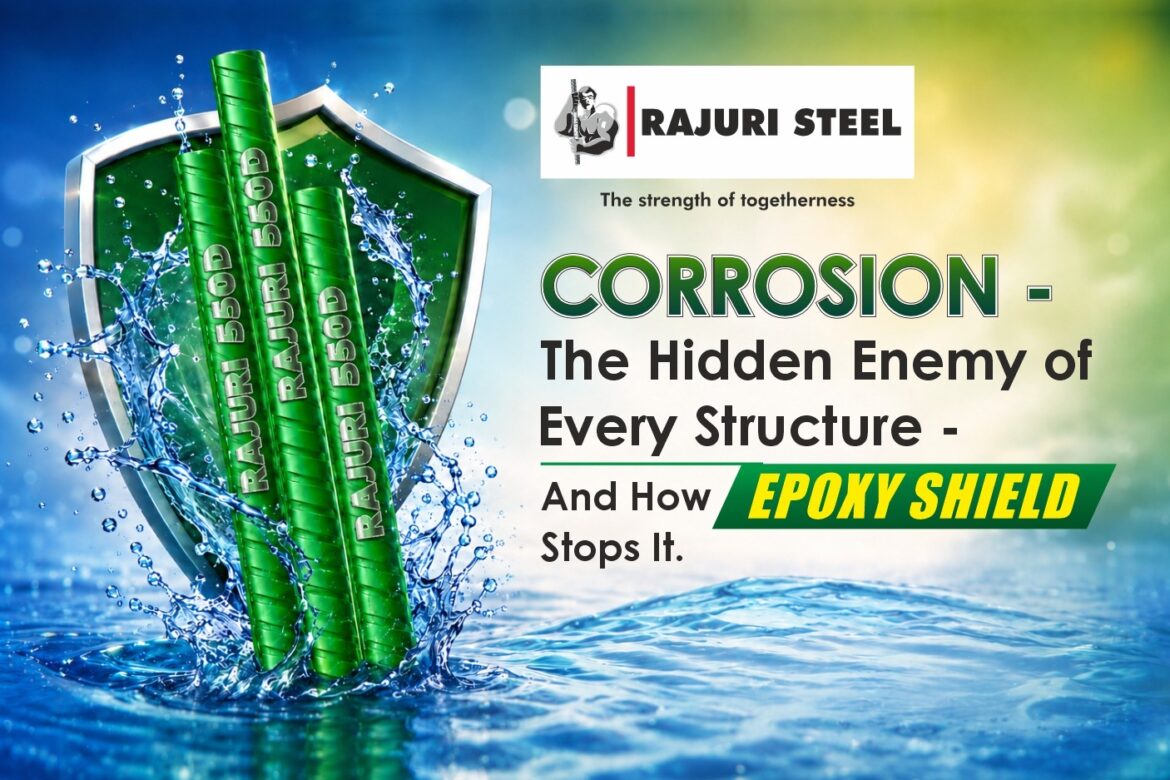
– Corrosion Protection: Epoxy shield coated TMT bars provide an extra layer of protection against corrosion, improving durability in moisture-prone environments.
– Overall Performance: Selecting the right grade and protection ensures better structural strength, safety, and long-term reliability.
Key Factors to Consider While Choosing TMT Bars
Choosing the right TMT bars requires careful evaluation of several factors that directly influence the strength, durability, and overall performance of a structure. Each parameter plays a crucial role in ensuring that the steel can withstand load, environmental conditions, and long-term usage. By understanding these key factors, builders and homeowners can make more informed and reliable decisions.
– Strength and Flexibility: A good TMT bar should offer the right balance between strength and ductility, allowing it to withstand heavy loads and absorb stress without breaking.
– Corrosion Resistance: High-quality TMT bars provide better resistance to rust, making them suitable for use in humid, coastal, or moisture-prone environments.
– Manufacturing Quality: Uniformity in size, shape, and surface finish reflects a controlled and reliable manufacturing process, ensuring consistent performance.
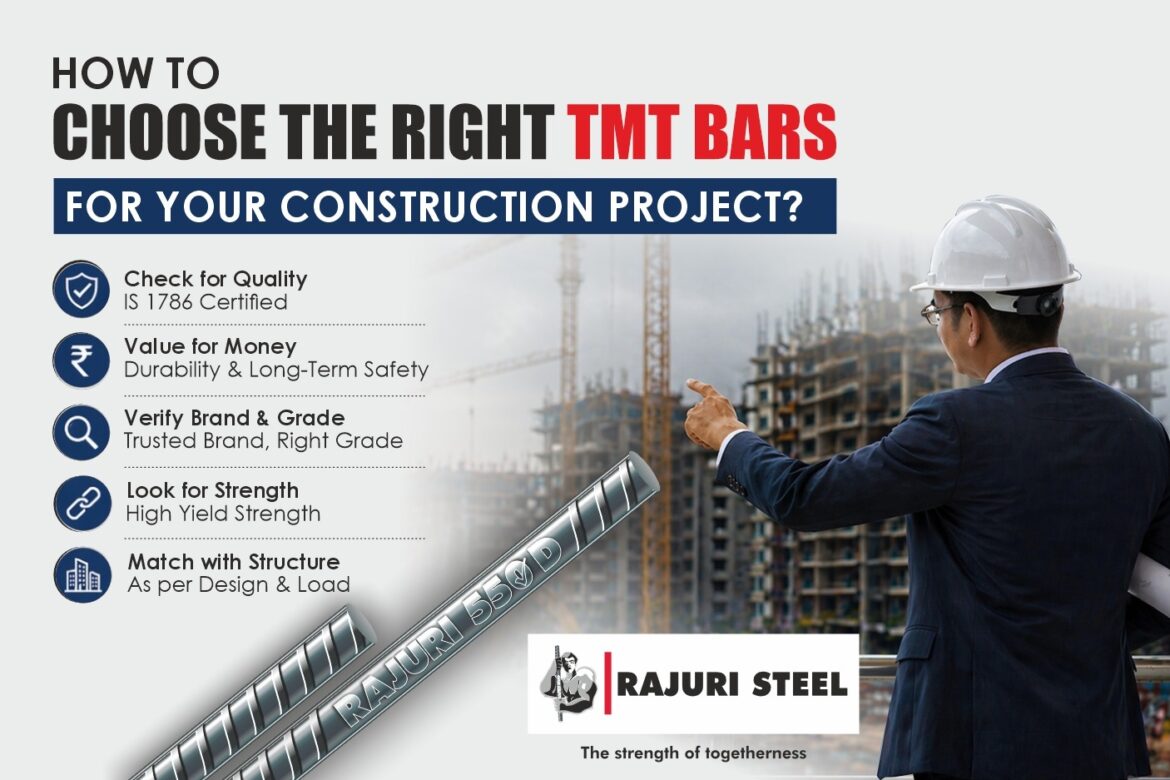
– Certification and Standards: Always ensure that the TMT bars comply with industry standards such as IS:1786 and carry a valid BIS certification for assured quality and safety.
Quick Checklist: 5 Things to Verify Before Buying TMT Bars
– ISI Mark: Ensure the bars carry the IS:1786 mark and a valid BIS license number.
– Corrosion Resistance: Prefer CRS or epoxy shield coated TMT bars for humid or high-moisture environments.
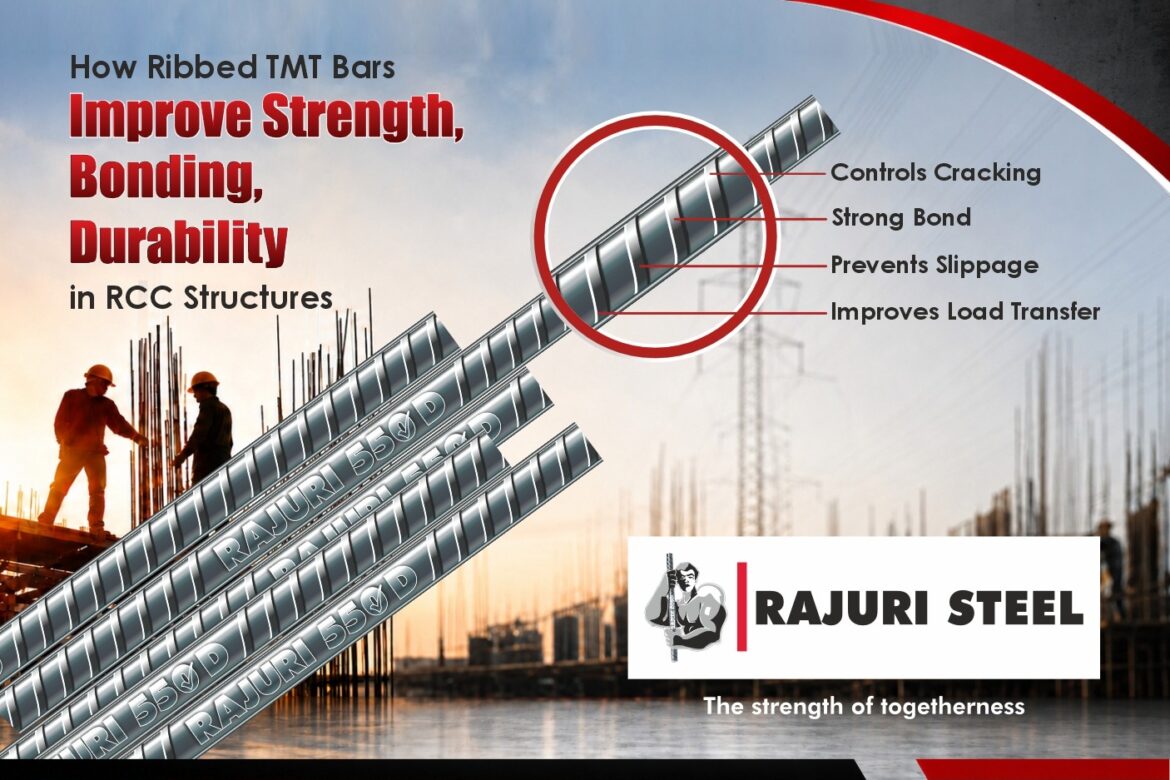
– Rib Pattern: Look for well-defined and uniform ribs for better bonding with concrete.
– Bendability: The bars should bend easily without developing cracks.
– Brand Reliability: Choose trusted manufacturers like Rajuri Steel that ensure consistent quality and performance.
Why Choosing the Right TMT Bars Matters for Your Project?
Selecting the right TMT bars plays a crucial role in ensuring the safety, strength, and long-term durability of any construction project. The quality of steel used directly impacts how well a structure can withstand load, environmental conditions, and wear over time. Poor-quality TMT bars can lead to structural weaknesses, higher maintenance costs, and potential safety risks in the future.
On the other hand, high-quality TMT bars offer better load distribution, enhanced durability, and improved resistance to corrosion and external stress. Every construction project has unique requirements, and choosing the right TMT bars should be based on factors such as load conditions, design specifications, and environmental exposure.
Consulting with engineers and selecting materials from trusted manufacturers ensures consistent quality and reliable performance. A well-informed decision not only strengthens the structure but also helps avoid costly repairs, making it essential to prioritise quality over short-term cost savings.
Additional Practical Tips
– Weight vs Cost: Always check the standard weight of TMT bars. Lower-priced bars may sometimes have less weight, which can affect structural strength.
– On-Site Storage: Store TMT bars above ground level and protect them from direct exposure to moisture to prevent rust before usage.
Conclusion
Choosing the right TMT bars is not just a technical decision—it is an investment in the safety and durability of your construction project. By focusing on quality, grade, and reliability, builders can ensure that their structures stand strong for years to come. In a growing construction landscape, making the right material choices is the foundation of building smarter, stronger, and more sustainable structures.