When you look closely at a TMT bar, you will notice raised patterns or ridges running along its surface. These are known as ribs, and they are much more than just a design feature. Ribs play a vital role in creating a strong bond between steel and concrete, which is essential for the strength, stability, and durability of any RCC (Reinforced Cement Concrete) structure.
Whether it is a residential building, commercial complex, bridge, dam, or industrial project, the effectiveness of reinforcement depends largely on how well the steel and concrete work together. This is where ribbed TMT bars make a significant difference by providing superior grip and bonding compared to plain steel bars.
Why Are Ribs Important in TMT Bars?
Ribs are specially designed protrusions present on the outer surface of TMT bars. These ribs are manufactured according to industry standards to improve the mechanical interlocking between steel and concrete.
Unlike plain bars, ribbed TMT bars provide enhanced grip, ensuring that the steel reinforcement remains firmly embedded within the concrete structure.
1. Stronger Bonding with Concrete
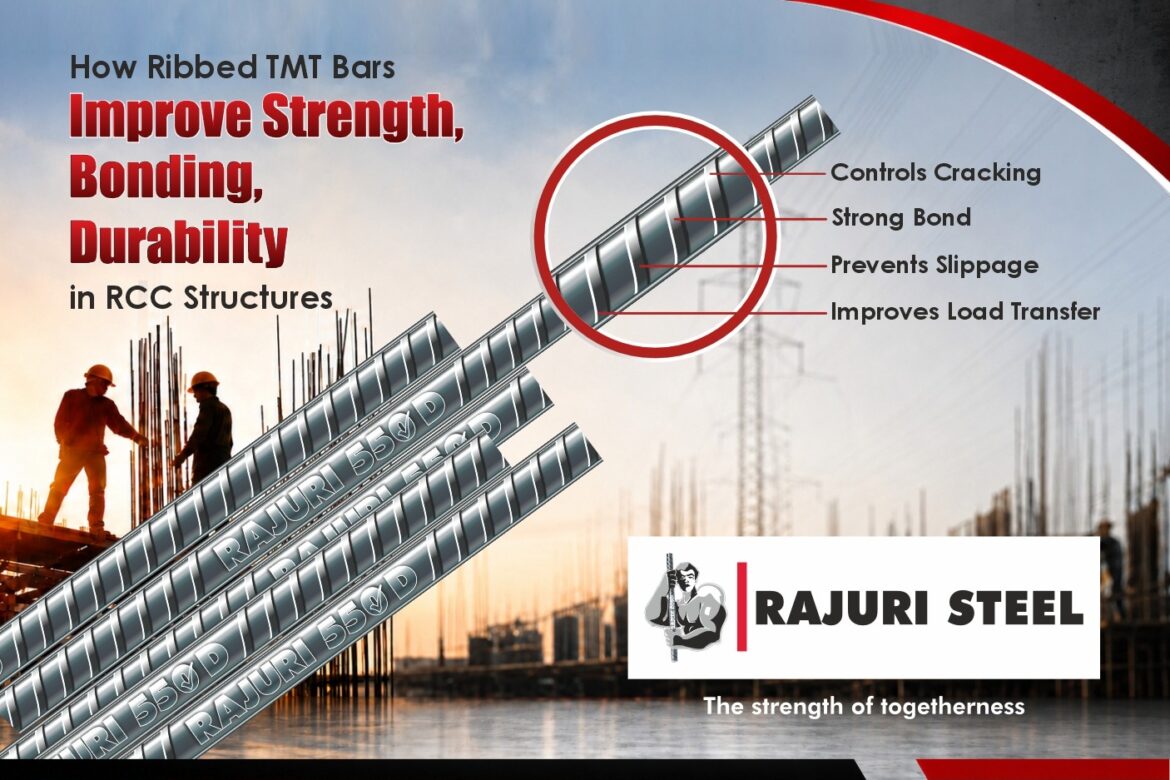
The primary purpose of ribs is to improve the bond between steel and concrete. When concrete hardens around the ribs, it creates a strong mechanical grip that helps prevent movement of the reinforcement bars inside the structure.
This stronger bond improves the overall performance and strength of RCC structures.
2. Prevents Slippage Under Load
Buildings and structures are constantly subjected to different types of loads, including the weight of occupants, furniture, vehicles, and environmental forces.
Without ribs, steel bars may slip within the concrete when subjected to heavy stress. The ribbed surface helps lock the bars in place and significantly reduces the chances of slippage.
3. Improves Load Transfer
In an RCC structure, steel and concrete must work together to carry loads effectively.
Ribs help transfer stress efficiently between concrete and reinforcement bars. This improves structural stability and allows the structure to handle higher loads more safely.
4. Enhances Earthquake Resistance
During an earthquake, buildings experience sudden movements and vibrations.
A strong bond between steel and concrete is essential for resisting these forces. Ribbed TMT bars help maintain this bond, improving the structure’s ability to withstand seismic activity and reducing the risk of structural failure.
5. Helps Control Cracking
Concrete naturally develops small cracks when subjected to stress.
Ribbed TMT bars help distribute these stresses more effectively, reducing crack formation and improving the durability of the structure over time.
Understanding Rib Design in TMT Bars
The ribs on TMT bars are not just a design feature; they are essential for ensuring a strong bond between steel and concrete. If TMT bars had a smooth surface without ribs, the grip between concrete and steel would be significantly weaker. This could lead to slippage of reinforcement bars under heavy loads, poor load transfer, reduced structural strength, and a higher risk of cracks over time. Ribbed TMT bars help overcome these challenges by creating a mechanical interlock with concrete, ensuring better stability and durability of RCC structures.
To achieve this superior bonding performance, TMT bars are designed with two types of ribs:
1. Longitudinal Ribs
These ribs run parallel to the length of the bar and help improve the overall bond between steel and concrete.
2. Transverse Ribs
These ribs run across the surface of the bar and create a strong mechanical grip with concrete. They play a crucial role in preventing slippage and improving load transfer within the structure.
The combination of longitudinal and transverse ribs helps TMT bars deliver better bonding strength, improved structural performance, and long-term durability in RCC construction.
Why Rib Design and Quality Matter
The presence of ribs alone is not enough to ensure strong bonding between steel and concrete. The effectiveness of a TMT bar also depends on the design and quality of its ribs. Factors such as rib height, rib spacing, rib angle, and manufacturing precision play a crucial role in determining the bonding strength and overall performance of the reinforcement.
A well-designed rib pattern helps improve load transfer, reduce slippage, and enhance the structural stability of RCC members. At the same time, it is important to maintain the right balance between bonding strength, ductility, and flexibility.
This is why high-quality TMT bars are manufactured with optimized rib patterns and strict quality control measures. Consistent rib design ensures reliable performance, better concrete bonding, and long-term durability of the structure.
Key Factors That Influence Rib Performance
– Rib height
– Rib spacing
– Rib angle
– Manufacturing precision
– Compliance with quality standards
Build Stronger Structures with Rajuri TMT Bars
At Rajuri Steel, every TMT bar is manufactured using advanced production technology and stringent quality control processes. The optimized rib design helps achieve superior bonding with concrete, contributing to stronger, safer, and more durable RCC structures.
Conclusion
The ribs on TMT bars may appear to be a small design feature, but they play a critical role in the strength and performance of RCC structures. By improving the bond between steel and concrete, preventing slippage, enhancing load transfer, and helping control cracks, ribs ensure that the reinforcement works effectively within the structure. Combined with proper rib design and quality manufacturing, ribbed TMT bars contribute significantly to the safety, stability, and long-term durability of buildings and infrastructure projects. Choosing high-quality TMT bars with optimized rib patterns is an important step toward building stronger and more reliable structures.