In the world of construction, even the smallest details can make a significant difference in the strength and lifespan of a structure. One such critical aspect is cover spacing—a fundamental practice that directly impacts the durability and safety of reinforced concrete structures. It plays a crucial role in protecting reinforcement steel from environmental exposure, ensuring long-term performance. Ignoring proper cover spacing can lead to early deterioration, reduced strength, and costly repairs over time.
At Rajuri Steel, we emphasize not only the use of high-quality steel but also the importance of correct construction practices like maintaining proper concrete cover spacing. By combining quality materials with the right techniques, we help ensure structures that are strong, reliable, and built to last for generations.
What is Cover Spacing in Construction?
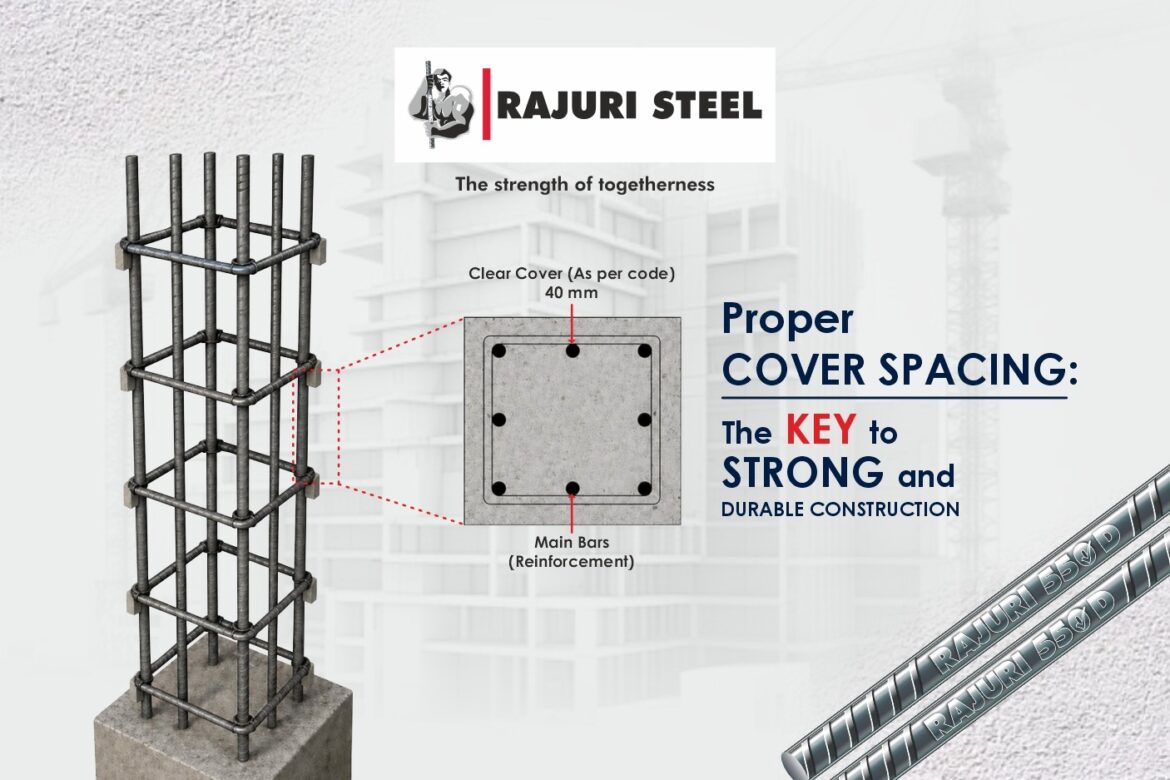
Cover spacing refers to the distance maintained between reinforcement steel (rebar) and the outer surface of concrete. This gap is ensured using cover blocks or spacers, which hold the steel in position during concrete pouring. It ensures that the reinforcement is properly embedded within the concrete, allowing both materials to work together effectively. Proper cover spacing also helps in maintaining uniform load distribution and structural stability.
For foundation work, the recommended cover spacing generally ranges between 40 mm to 75 mm, depending on soil conditions, exposure levels, and structural design. In aggressive environments such as coastal or high-moisture areas, slightly higher cover may be required to enhance protection. Following these guidelines helps achieve better durability, safety, and compliance with construction standards.
Importance of Maintaining Proper Cover Spacing
Maintaining proper cover spacing is essential to ensure the strength, durability, and safety of any reinforced concrete structure. It not only protects the internal steel from environmental damage but also helps the structure perform efficiently under various loads and conditions. Ignoring this critical aspect can lead to reduced lifespan and structural issues over time.
– Prevents Corrosion and Rust
Steel reinforcement is highly vulnerable to moisture and environmental exposure. Proper concrete cover acts as a protective barrier, preventing water and chemicals from reaching the steel and causing corrosion.
– Ensures Structural Strength
When cover spacing is maintained correctly, the bond between steel and concrete remains strong, allowing the structure to efficiently handle loads, pressure, and stress over time.
– Enhances Structural Longevity
Structures with proper cover spacing tend to last longer, as the internal reinforcement remains protected and functional for decades.
– Provides Fire Resistance
Concrete acts as insulation for steel. Adequate cover spacing helps delay the heating of reinforcement during fire, improving structural stability.
– Protects Against Environmental Damage
In areas exposed to coastal air, chemicals, or high humidity, proper cover spacing becomes even more critical to prevent premature deterioration.
Recommended Cover Spacing for Foundations
Maintaining the correct cover spacing in foundations is essential to ensure that reinforcement steel is adequately protected and performs effectively over time. The required cover mainly depends on environmental exposure, soil conditions, and the structural load the foundation is designed to carry.
- Minimum: 40 mm
- Maximum: 75 mm
Depends on:
- Soil Type
Aggressive soils with high moisture or chemical content require greater cover to safeguard the steel. - Exposure Conditions
Structures exposed to rain, humidity, or coastal air need increased cover spacing for long-term durability. - Structural Load Requirements
Heavier loads may require adjustments in cover to ensure proper strength and performance of the foundation.
Following these standards helps maintain the right balance between protection and structural efficiency, ensuring both safety and compliance with construction norms.
Role of Rajuri Steel in Strong Construction
At Rajuri Steel, we are committed to delivering high-quality TMT steel bars that meet modern construction standards. Along with superior products, we continuously share practical construction knowledge to help engineers and builders achieve reliable and long-lasting structures. We believe that the right combination of quality materials and correct construction practices leads to stronger and safer buildings. Our focus is not just on supplying steel, but on contributing to overall construction excellence.
Our approach focuses on strength, durability, and trust, ensuring every project stands the test of time. By maintaining strict quality standards and promoting awareness about best practices, we support the creation of structures that are resilient, efficient, and future-ready.
Conclusion
“Follow cover spacing” is not just a guideline—it is a critical construction practice that directly affects the safety, durability, and performance of any structure. By maintaining proper spacing and using quality materials, you build a foundation that remains strong for generations. Small construction details like these play a major role in preventing long-term damage and costly repairs. Adopting such best practices ensures that your structure performs reliably under all conditions and stands firm over time.