Steel reinforcement plays a critical role in determining the strength, stability, and durability of any structure. Whether you’re constructing a residential home, commercial building, industrial facility, or infrastructure project, the quality and installation of reinforcement steel directly impact the building’s long-term performance.
However, even the highest-quality TMT bars may fail to deliver their full potential if common reinforcement mistakes are overlooked during construction. From improper storage to inadequate corrosion protection, these errors can compromise structural safety, increase maintenance costs, and shorten the lifespan of the building.
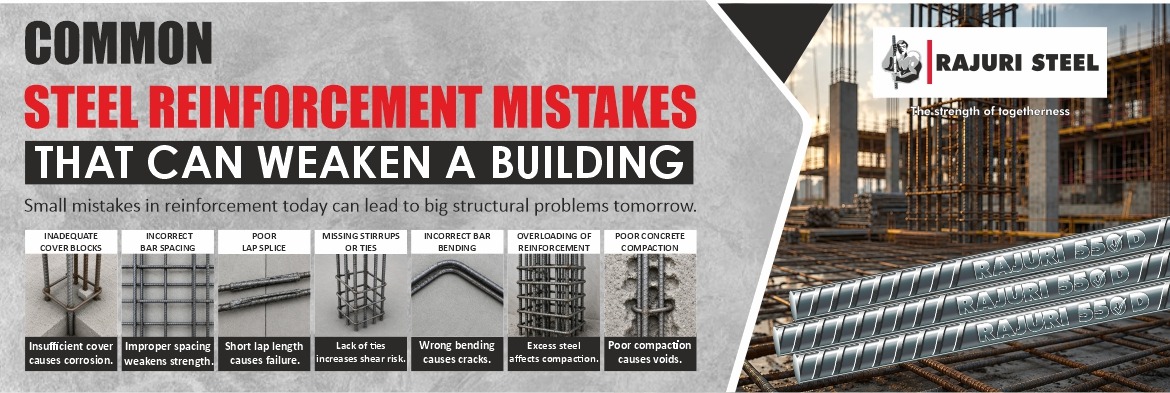
1. Inadequate Cover Blocks
Concrete cover protects reinforcement steel from moisture, chemicals, and environmental exposure. Insufficient cover allows corrosion to develop more quickly, reducing the durability of the structure.
Best Practice: Always maintain the specified concrete cover using quality cover blocks as per structural drawings.
2. Incorrect Bar Spacing
Improper spacing between reinforcement bars can affect load distribution, concrete flow, and structural strength. Bars placed too close or too far apart may compromise the overall performance of reinforced concrete.
Best Practice: Follow the approved reinforcement spacing mentioned in the structural design.
3. Poor Lap Splice
Lap splicing joins two reinforcement bars to transfer loads effectively. A lap length that is too short or improperly positioned can weaken the continuity of reinforcement and reduce structural performance.
Best Practice: Ensure lap splices are provided with the correct length and at the recommended locations specified by the structural engineer.
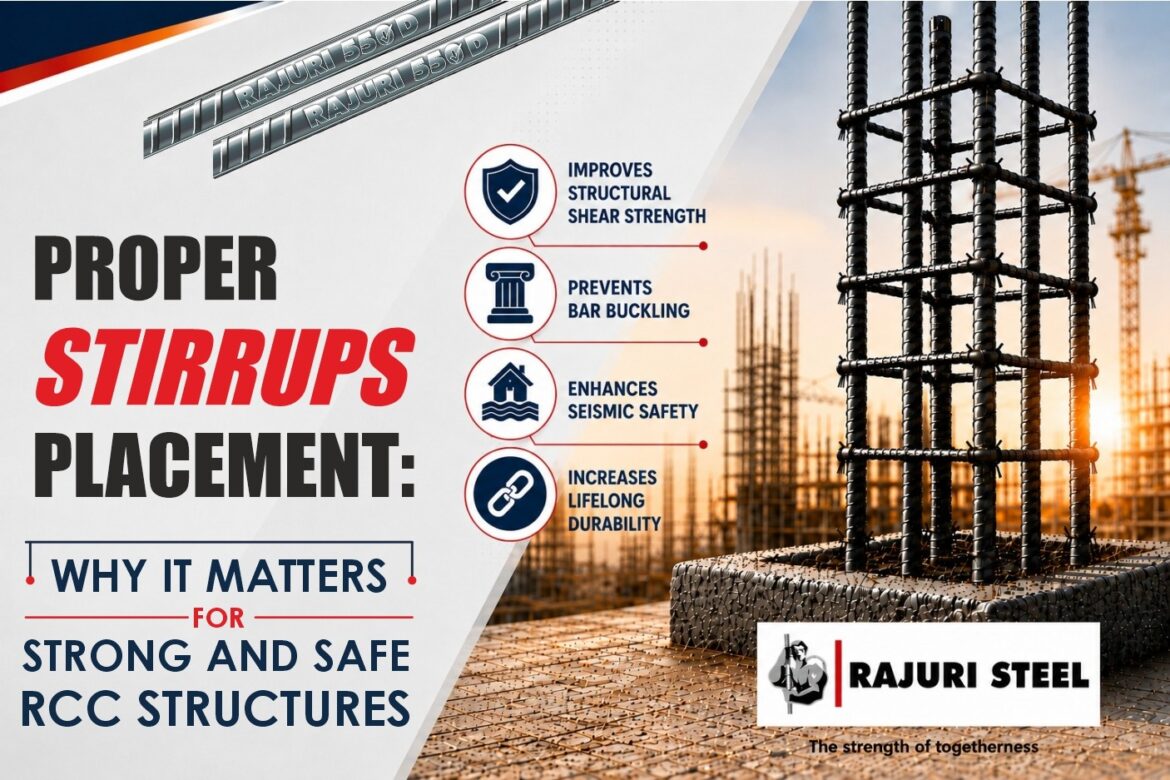
4. Missing Stirrups or Ties
Stirrups and ties play a critical role in resisting shear forces and confining concrete around reinforcement bars. Missing or improperly spaced ties can significantly reduce the strength and stability of beams and columns.
Best Practice: Install stirrups and ties according to approved structural drawings with the specified spacing.
5. Incorrect Bar Bending
Improper bending of reinforcement bars may create stress concentrations, reduce bond strength, and increase the risk of cracking under load.
Best Practice: Use proper bending equipment and follow standard bending dimensions without damaging the reinforcement.
6. Overloading of Reinforcement
Using excessive reinforcement may seem beneficial, but overcrowded steel can restrict concrete flow, making proper compaction difficult and increasing the risk of honeycombing and voids.
Best Practice: Follow the reinforcement details specified in the structural design without adding unnecessary steel.
7. Poor Concrete Compaction
Even correctly placed reinforcement cannot perform effectively if concrete is not properly compacted. Poor compaction creates air voids, weakens the bond between steel and concrete, and reduces overall structural durability.
Best Practice: Ensure proper concrete vibration and compaction during casting to achieve a dense and durable structure.
Why Quality Steel Reinforcement Matters
The strength, performance, and longevity of any building depend not only on the quality of concrete but also on the strength, quality, and proper installation of its reinforcement steel. Even the most advanced construction designs can fall short if reinforcement is poorly selected, improperly handled, or incorrectly installed. Common mistakes such as inadequate cover blocks, incorrect bar spacing, poor lap splicing, missing stirrups, improper bar bending, overloading of reinforcement, and poor concrete compaction can significantly reduce structural performance, increase maintenance costs, and shorten the service life of a building.
By choosing high-quality TMT bars and following proper reinforcement practices, builders can achieve:
– Improved structural strength
– Better load-bearing performance
– Enhanced durability
– Reduced corrosion risk
– Lower maintenance and repair costs
– Increased structural safety and reliability
– Longer service life of the structure
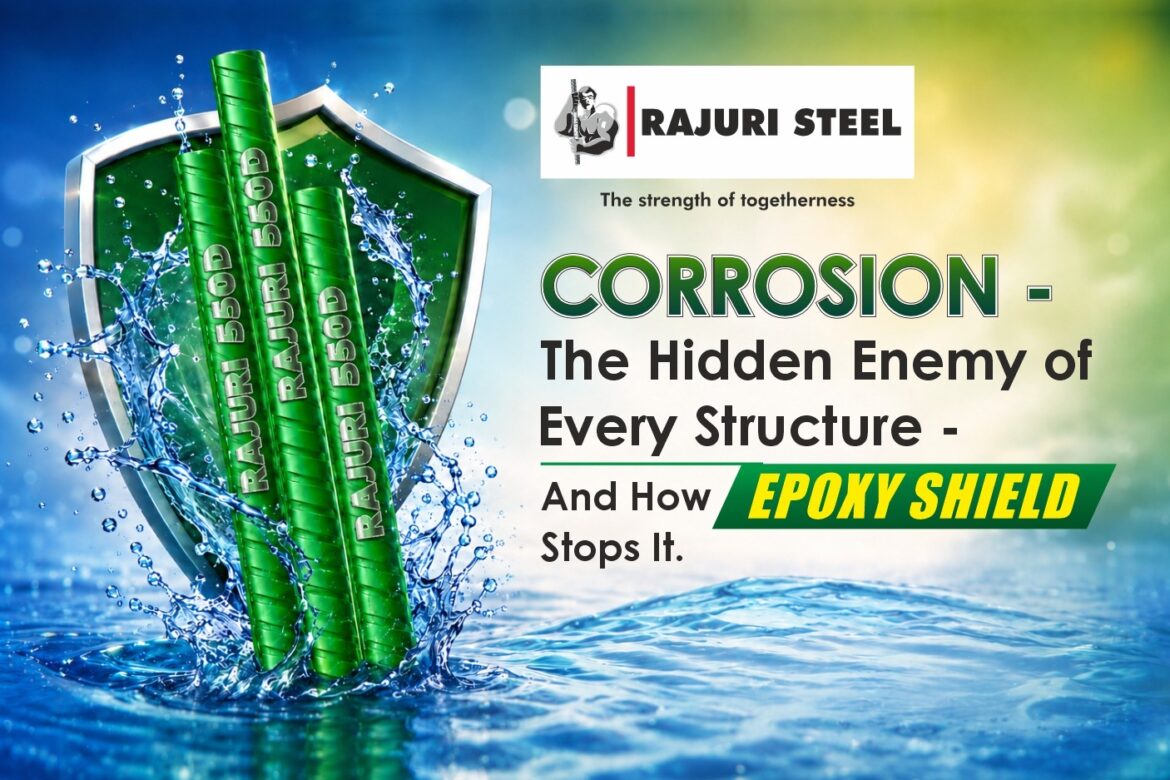
For projects exposed to coastal conditions, high humidity, heavy rainfall, or industrial environments, selecting corrosion-resistant reinforcement is equally important. Advanced solutions such as Rajuri Epoxy Shield TMT Bars provide an additional layer of protection against moisture and rust, helping preserve structural integrity and extend the service life of the building.
Conclusion
Strong and durable construction begins with proper reinforcement practices. Even small mistakes such as inadequate cover blocks, incorrect bar spacing, poor lap splicing, missing stirrups, improper bar bending, overloading of reinforcement, and poor concrete compaction can have a significant impact on the safety, strength, and longevity of a structure. By selecting high-quality TMT bars and following approved construction practices, builders can minimize structural risks, reduce future maintenance costs, and ensure long-term performance. With dependable reinforcement solutions from Rajuri Steel, every project is built on a foundation of strength, reliability, and lasting durability. Because every strong structure begins with the right reinforcement.