
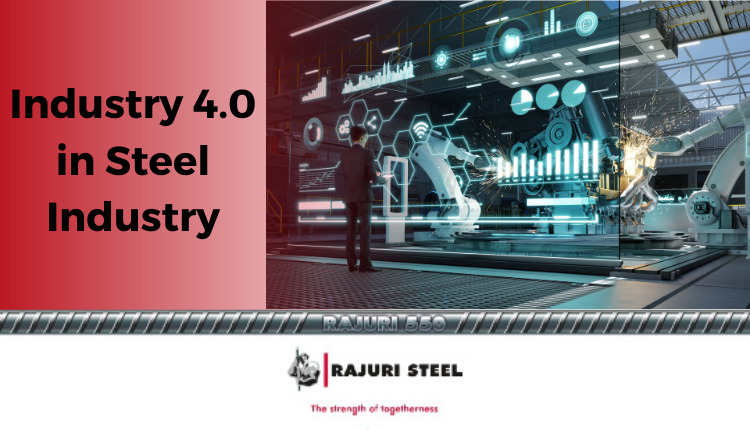
Industry 4.0 refers to the latest industrial revolution that follows three earlier ones. The first industrial revolution happened in the mid-18th century till about 1830 and was marked the shift from hand production to steam-based machinery. The second occurred between 1870 and 1914 with the birth of electricity and the telegraph. The third was brought about by information and computer technology in the 20th century.
How does Industry 4.0 work?
Industry 4.0 is based on cutting-edge technologies that enable digital transformation. Artificial Intelligence (AI), Machine Learning (ML) and Internet of Things (IoT) form the core of Industry 4.0. Digitalization is a pre-condition for Industry 4.0, but Industry 4.0 is much more than digitalization!
IoT sensors placed on machines and other equipment monitor performance in real time and send vast amounts of data to ML models, which analyse big data and fine patterns in the operation to learn how the system works. The ML model sends analysed data to the AI solution. AI is the brains of the operations; it structures analysed data and finds ways to improve operational performance and efficiency. Hence, these three technologies together generate valuable insights that can take manufacturing, production, and management to another level.
How Industry 4.0 can transform the Steel Industry
- Vertical integration and networked production systems: such as Cyber Physical Production System
- Horizontal integration: intensive networking and communication of all plants and along the complete supply chain
- End-to-end engineering: such as an intelligent product with knowledge of its own quality and production history
- 100% traceability of intermediate and final products
- Industrial IoT (IIOT) platform: centralizes data from multiple sources and structures the data for analysis, minimizing the need for different programs
- Digital Twinning: creating virtual models of entire production lines, products, services, or business processes to optimize assets and manufacturing, using data collected from IoT sensors
- Virtual reality (VR): to enable enhanced safety training that would otherwise be too dangerous
Thus, the technologies of Industry 4.0 will drive radical changes in the steel industry in the aspects of manufacturing processes, resource utilization, waste minimization, production, cost savings, and business management. It will empower steel companies with higher levels of productivity and efficiency, and transform the steel industry as a whole.

All Comments:
Industry 4.0 represents a transformative leap forward for the steel industry, akin to the monumental shifts of the past industrial revolutions. The first, dating back to the mid-18th century, saw the rise of steam-based machinery, altering production methods. Then, in the late 19th and early 20th centuries, the second industrial revolution was characterized by electricity and the telegraph, revolutionizing communication and power generation.
The third industrial revolution, ushered in by information and computer technology in the 20th century, brought about unprecedented automation and connectivity. Now, in the era of Industry 4.0, we stand at the precipice of yet another revolution, one driven by the fusion of digital technologies, artificial intelligence, and automation.
This transformation promises to redefine the steel industry in profound ways. Smart factories equipped with sensors and data analytics enable real-time monitoring and predictive maintenance, enhancing efficiency and minimizing downtime. Autonomous robots and machine learning algorithms optimize production processes, ensuring the highest quality products.
Integrating the Internet of Things (IoT) facilitates seamless communication within and between steel plants, forging agile and responsive supply chains. With the ability to adapt swiftly to market demands, the steel industry becomes more resilient and competitive.
In conclusion, Industry 4.0 is the steel industry’s modern-day metamorphosis, propelling it into an era of unparalleled innovation and efficiency. Just as past industrial revolutions reshaped the world, this latest transformation holds the potential to redefine the steel industry and its role in our global economy. Embracing these technological advancements is not merely an option but a necessity for staying relevant and competitive in the evolving industrial landscape.