When constructing a house, building, or any RCC (Reinforced Cement Concrete) structure, most people focus on the quality of cement and TMT bars. However, one crucial aspect that is often overlooked is the proper placement of stirrups. Stirrups, commonly known as rings in local construction terminology, may appear to be small steel loops, but they play a vital role in ensuring the strength, stability, safety, and durability of a structure.
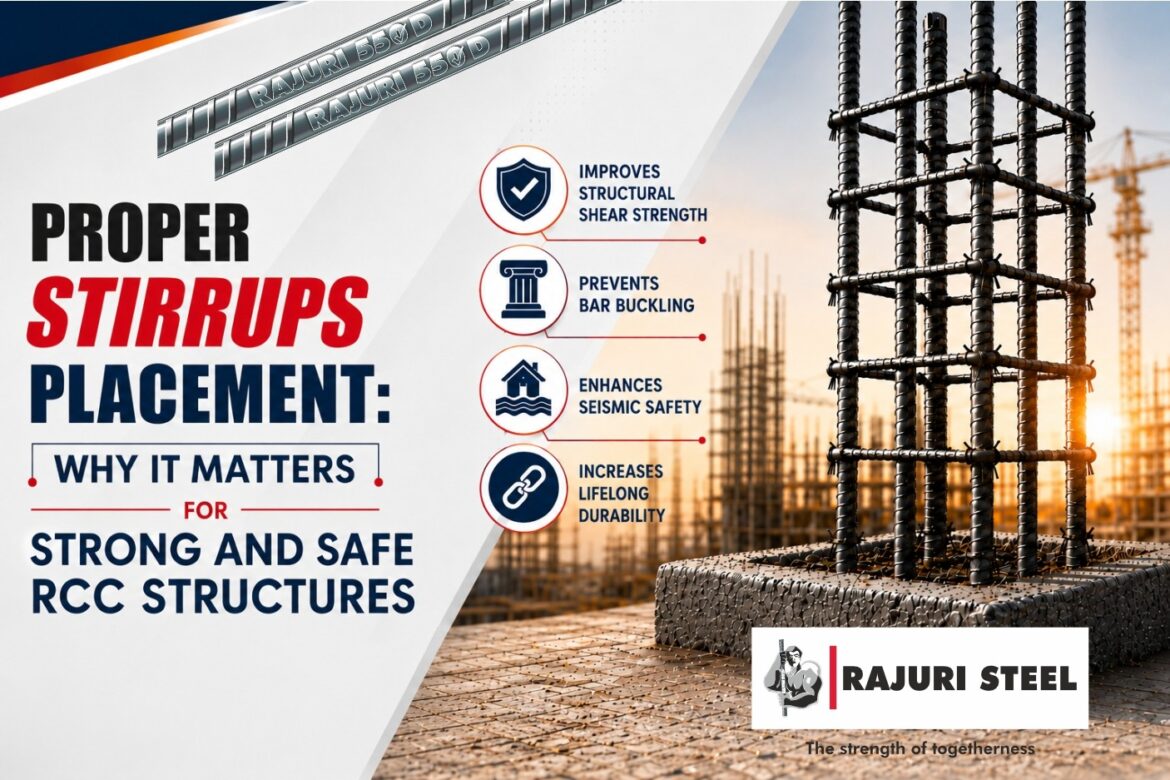
Stirrups are steel bars bent into rectangular or square shapes and tied around the main TMT bars in beams and columns. Their primary function is to hold the main reinforcement bars securely in position, provide resistance against shear forces, and enhance the overall structural integrity of the concrete member.
Why Is Proper Stirrups Placement Important?
1. Holds Main TMT Bars Securely
Stirrups keep the main vertical and horizontal reinforcement bars in their correct position during concrete pouring. This ensures that the structure is built exactly according to the design specifications.
2. Improves Structural Shear Strength
Properly placed stirrups help the structure resist diagonal shear forces and sudden cracks caused by heavy loads. This makes beams and columns stronger, safer, and more reliable.
3. Prevents Bar Buckling
Under immense downward or lateral pressure, main vertical TMT bars try to bend or bulge outward (buckle). Stirrups act as a tight cage, providing lateral support and preventing such structural failures.
4. Enhances Seismic Safety
During earthquakes, structures undergo extreme vibrations. Correct stirrup hooks lock the concrete core together preventing sudden collapse and significantly reducing the risk of structural damage.
5. Increases Lifelong Durability
A well-reinforced structure can withstand heavy loads, tremors, and environmental conditions more effectively, resulting in a significantly longer service life.
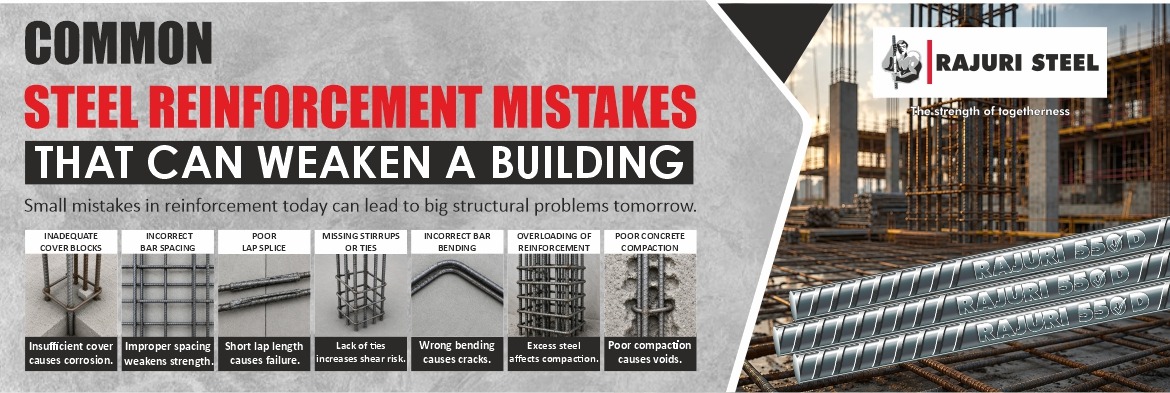
Common Stirrups Placement Mistakes to Avoid
Even high-quality TMT bars cannot deliver their full strength if stirrups are not placed correctly. Incorrect spacing, loose tying, or improper positioning can weaken the overall structure and affect its load-bearing capacity. To ensure better structural stability and durability, avoid the following mistakes:
– Using excessive spacing between stirrups.
– Improper tying of stirrups with main bars.
– Ignoring design specifications provided by engineers.
– Using low-quality reinforcement steel.
How Stirrups Work: The Shear Force Problem They Solve
Concrete is very strong in compression but relatively weak in resisting shear forces. When beams and columns are subjected to loads, diagonal cracks can develop due to these shear stresses. Stirrups act as reinforcement against these forces by holding the concrete core together and restricting crack propagation. This helps improve the structural stability and load-carrying capacity of RCC members, ensuring safer and more durable construction.
Stirrups in Beams vs Stirrups in Columns: Different Roles
Although stirrups are used in both beams and columns, their functions differ slightly:
– In Beams:Stirrups primarily resist diagonal shear forces and help prevent diagonal cracking caused by downward loading.
– In Columns:They act as lateral ties that hold the vertical reinforcement bars in place, prevent bar buckling, and confine the concrete core under massive compressive loads.
Proper placement of stirrups in both beams and columns is essential for ensuring structural strength and stability.
Build Stronger Structures with Rajuri TMT Bars
Proper stirrups placement is essential for ensuring the strength and stability of RCC structures. However, the quality of steel used in reinforcement is equally important. Since stirrups are bent and tied around the main reinforcement bars, the steel must offer excellent bendability, ductility, and strength without developing cracks.
Rajuri TMT Bars are manufactured using advanced thermo-mechanical treatment technology, providing superior strength, flexibility, and excellent bonding with concrete. When proper stirrups placement is combined with the reliability of Rajuri TMT Bars, it helps create safer, stronger, and more durable structures built to last for generations.
Conclusion
Proper stirrups placement is a small detail that makes a massive difference in construction safety. By maintaining the correct spacing, ensuring 135-degree hooks, and avoiding loose tying, builders can dramatically improve the core strength of an RCC structure. Combined with premium-quality Rajuri TMT bars, these proper reinforcement practices help create structures that stand strong and safe for generations.