In modern reinforced concrete construction, TMT bars play a crucial role in ensuring the structural strength and stability of any building. However, one common mistake that can severely impact earthquake-resistant buildings is the use of rusted TMT bars. Rust may seem like a minor surface issue, but in reality, it slowly weakens the steel and reduces its ability to support heavy loads.
This hidden damage often goes unnoticed during construction, making TMT bars corrosion a silent enemy of structural safety. Understanding why rusted TMT bars should be avoided is essential for creating safe, durable, and long-lasting reinforced concrete structures. Using corroded reinforcement can also lead to higher maintenance and repair costs, as corrosion-related damage often requires expensive structural strengthening much earlier than expected.
How Rust Forms on TMT Bars
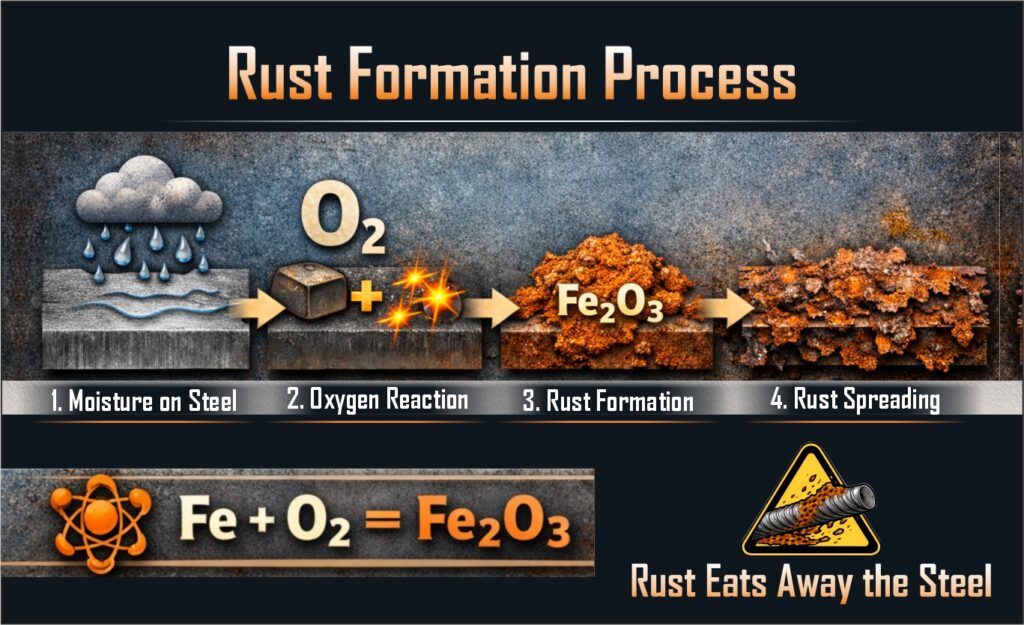
Rust forms on TMT bars due to a natural chemical process called oxidation. Since steel contains iron, it reacts with oxygen and moisture present in the environment, especially in humid and coastal regions of India.
Step-by-Step Rust Formation Process
• Moisture (water or humidity) comes in contact with the steel surface.
• Oxygen from air reacts with iron.
• This reaction forms iron oxide, commonly known as rust.
• Rust gradually spreads and eats away the steel surface.
Once corrosion starts, it creates a porous and flaky layer on the surface of the reinforcement. This reduces the effective cross-section of the bar and allows more moisture to penetrate, accelerating TMT bar corrosion and reducing its service life.
How Rusted Bars Affect Structural Performance
Rusted TMT bars reduce the overall performance of a structure by weakening both the tensile strength of steel and its bond with concrete. Corrosion damages the ribs that provide anchorage, leading to poor load transfer in reinforced concrete structures. This results in cracks, slippage, and reduced resistance to heavy loads, wind forces, and seismic actions.
Reduction in Bond Strength
Rust damages the rib pattern, reducing friction and mechanical interlock between concrete and steel.
Loss of Load Carrying Capacity
Corrosion reduces the effective diameter of reinforcement, significantly lowering its tensile strength.
Cracking and Spalling of Concrete
Rust expansion creates internal pressure, causing concrete cracking and cover spalling.
Reduced Durability and Service Life
Continuous corrosion shortens structural life and increases maintenance costs.
Earthquake Safety and Corrosion
For earthquake-resistant buildings, ductility and strong steel-concrete bonding are critical. During seismic shaking, reinforcement must undergo repeated tension and compression. Rusted TMT bars lose their ductility and bonding capacity, leading to slippage inside concrete and brittle failure of columns, beams, and shear walls, which is extremely dangerous in seismic zones.
Best Practices to Avoid Using Rusted TMT Bars
–Store TMT bars above ground and cover them with waterproof sheets.
–Inspect for scaling, pitting, and flaking before use.
–Clean light rust; reject heavily corroded bars.
–Always use BIS-certified TMT bars with high corrosion resistance.
Why Choose Quality Steel Like Rajuri TMT Bars?
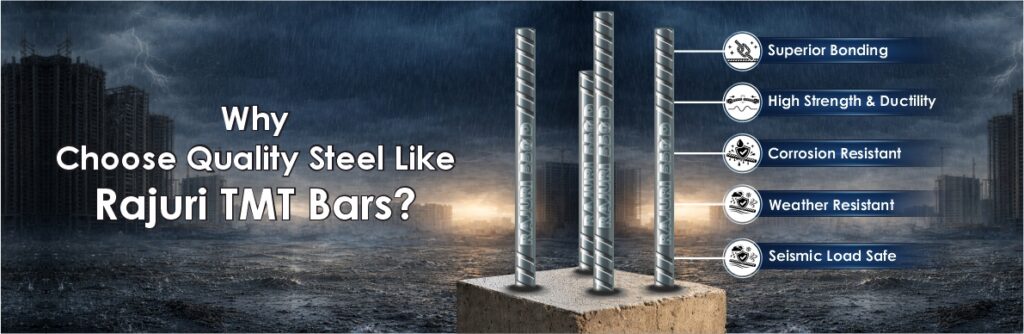
High-quality Rajuri Steel TMT Bars are manufactured using advanced thermo-mechanical treatment to ensure:
–Uniform rib patterns for superior bonding
–High tensile strength with excellent ductility
–Enhanced corrosion resistance
–Weather-resistant for long-lasting performance
–Reliable performance under seismic and dynamic loads
Rajuri Steel is among the trusted manufacturers of best quality TMT bars in India, engineered for long-term durability and safety.
Conclusion
Using rust-free TMT bars is not just good practice—it is essential for structural safety, durability, and earthquake resistance. Corrosion weakens buildings silently from within. By selecting certified, high-quality Rajuri TMT bars and following proper storage and handling, you ensure long-lasting, strong, and safe construction.
Strong Bond. Strong Structure. Strong Future with Rajuri Steel.