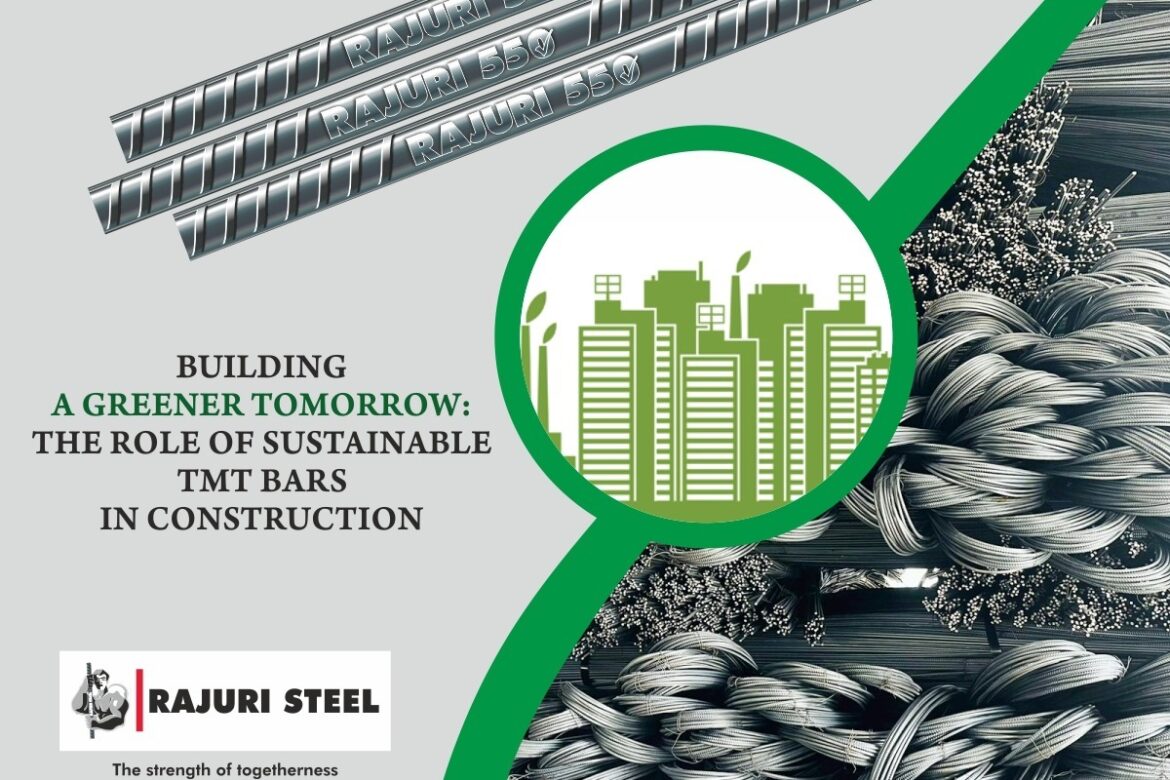
In the pursuit of a sustainable and eco-friendly future, the construction industry plays a pivotal role. Green building practices are becoming increasingly essential, with a focus on materials that not only provide structural integrity but also minimize environmental impact.
Building a greener tomorrow requires a thoughtful reconsideration of construction materials, and one key player in this sustainability revolution is the use of Thermomechanically Treated (TMT) Bars.
TMT bars, known for their superior strength and durability, are emerging as a sustainable choice that aligns with the principles of environmentally conscious construction.
Unlike traditional steel bars, the manufacturing process of TMT Bars involves controlled cooling, significantly reducing carbon emissions and contributing to a smaller ecological footprint. The durability and corrosion resistance of TMT Bars not only ensure the longevity of structures but also diminish the need for frequent replacements, aligning seamlessly with the principles of sustainable construction. As builders increasingly prioritize eco-friendly practices, TMT Bars stand as a crucial component in shaping the infrastructure of a more environmentally conscious and resilient future.
Unveiling the Environmental Advantages of TMT Bars
Reduced Carbon Footprint:
The manufacturing process of TMT Bars involves controlled cooling, resulting in significantly lower carbon emissions compared to traditional steel production. This reduction in carbon footprint contributes to a more eco-friendly construction process.
Energy Efficiency:
TMT Bars exhibit superior mechanical properties due to thermomechanical treatment, achieved with lower energy consumption during the manufacturing process. This energy efficiency aligns with sustainable practices, promoting resource conservation.
Longevity and Durability:
The inherent strength and corrosion resistance of TMT Bars contribute to the longevity of structures. Longer-lasting buildings reduce the need for frequent repairs and replacements, ultimately decreasing the demand for new materials and minimizing environmental impact.
Recyclability:
TMT Bars are highly recyclable at the end of a building’s life. This recyclability supports a closed-loop system, where the bars can be reused in new construction projects, reducing the demand for virgin materials and promoting a circular economy.
Resource Conservation:
The use of TMT Bars helps conserve natural resources. Their enhanced strength allows for the optimization of material usage in construction, reducing the overall amount of steel and concrete required for a project. This resource efficiency contributes to sustainable building practices.
Reduced Environmental Impact on Transportation:
The durability and strength of TMT Bars contribute to the creation of lighter and more efficient structures. This not only minimizes the amount of material needed but also reduces the weight of construction components, leading to lower transportation-related emissions and a smaller overall environmental impact.
Resistance to Corrosion:
TMT Bars are inherently resistant to corrosion, which is a common challenge in construction materials, especially in harsh environmental conditions. This corrosion resistance ensures the longevity of structures, minimizing the need for maintenance and repairs, and consequently reducing the environmental impact associated with these activities.
In conclusion, the integration of sustainable TMT Bars in construction emerges as a pivotal step towards fostering a greener and more resilient future. These bars, with their reduced carbon footprint, enhanced durability, and recyclability, showcase a commitment to environmentally conscious building practices. As the construction industry continues to evolve, the adoption of TMT Bars stands as a beacon of progress, demonstrating that strength and sustainability can coexist harmoniously.