
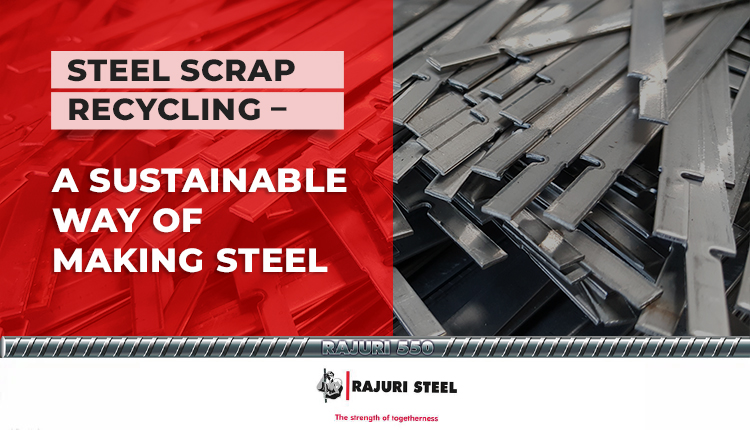
Carefully managing our limited natural resources is essential in a world where the population is projected to peak at multiplying speed in the coming years. For maximum resource efficiency, we must shift away from the antiquated “take, make, consume, and dispose” approach and toward a circular economy paradigm. Products must be made to be reusable and re-manufacturable in order to significantly cut down on energy and natural resource expenditures.
One of the most widely used metals in the world, steel is used to construct anything from the world’s highest skyscrapers to standard kitchen items. Through the Industrial Age, steel propelled technical development, and it still does so today. While iron ore continues to be the main source of steel production, used or recycled steel in the form of scrap is the secondary raw material for the steel industry.
The true economic benefit of recycling steel, however, comes from the significant primary production expenses that are avoided. By recycling steel, you can skip the initial step of making steel, which involves turning iron ore into iron in a blast furnace. The scrap steel can be directly integrated into the second stage in place of the blast furnace, saving all the energy that would otherwise be used there.
Ministry of Steel has issued the Steel Scrap Recycling Policy. The policy aims to achieve the following objectives –
· To promote a circular economy in the steel sector.
· To promote the formal and scientific collection, dismantling, and processing activities for end-of-life products that are sources of recyclable (ferrous, non-ferrous, and other non-metallic) scraps which will lead to resource conservation and energy savings and setting up of an environmentally sound management system for handling ferrous scrap.
· Processing and recycling of products in an organized, safe, and environment-friendly manner.
· To create a mechanism for treating waste streams and residues produced from dismantling and shredding facilities in compliance with Hazardous & Other Wastes (Management & Transboundary Movement) Rules, 2016 issued by MoEF & CC.
· To promote 6Rs principles of Reduce, Reuse, Recycle, Recover, Redesign and Remanufacture through scientific handling, processing, and disposal of all types of recyclable scraps including non-ferrous scraps, through an authorized center/facility.
Rajuri Steel supports this policy and envisions a sustainable future.
All Comments:
It’s great to see a growing awareness of the importance of sustainable practices in today’s world, and steel scrap recycling is a shining example of how we can make a significant positive impact. As the global population continues to grow at an unprecedented rate, it’s crucial that we shift away from the traditional linear model of “take, make, consume, and dispose” and embrace a circular economy approach.
Steel is a fundamental material that plays a vital role in our everyday lives, from towering skyscrapers to our household utensils. Throughout history, steel has driven technological advancements, and it continues to do so. However, the conventional method of steel production primarily relies on iron ore, which depletes natural resources and consumes vast amounts of energy. This is where steel scrap recycling becomes a beacon of sustainability.
Recycling steel scrap not only reduces the demand for virgin resources but also minimizes energy consumption and greenhouse gas emissions. This sustainable approach not only benefits the environment but also makes economic sense. It helps conserve resources, reduces the carbon footprint, and creates job opportunities in the recycling industry.
Furthermore, recycling steel is a prime example of how products should be designed with reusability and re-manufacturability in mind. This “closing the loop” approach ensures that steel products have a longer lifecycle, contributing to a more sustainable and efficient use of resources.
In conclusion, steel scrap recycling is a critical component of the transition towards a more sustainable and circular economy. By prioritizing the reuse and recycling of steel, we can significantly reduce our environmental impact while continuing to enjoy the benefits of this versatile material. It’s a win-win for both our planet and our future generations.