
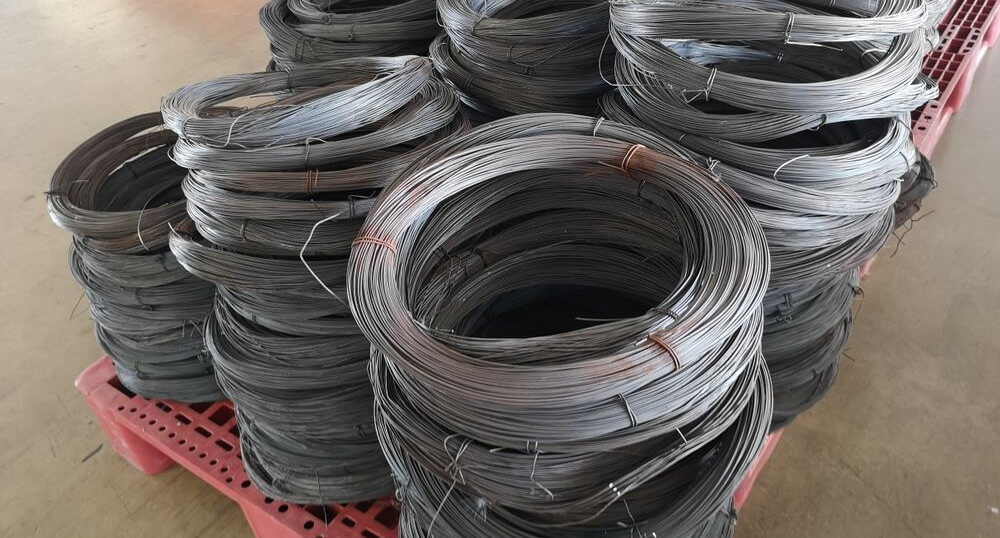
Binding Wire Applications:
In RCC construction, its role is to keep the Rajuri TMT rebars in their exact position and to maintain a cage in the structural section. This is accomplished by knotting at intersections using binding wire of mild steel, also called annealed wire. It serves its purpose at the intersection of longitudinal and transverse reinforcement, ensuring proper alignment before and during concrete pouring.
For dependable quality, it’s best to choose a trusted brand, preferably from the same source where TMT bars are procured — like Rajuri Steel — to maintain consistency across materials used.
Usage in RCC Construction:
Binding wire finds application wherever steel bars are used in RCC work. It is tied at the joints which are spaced as per the engineer’s design specifications.
When concrete is being poured into a beam or a slab, the steel bars must be held firmly in place — this is exactly what the binding wire does.
For lesser diameter wires, a simple manual binding tool is enough. However, modern construction practices are shifting towards automatic rebar tying machines, especially in large-scale projects. These machines improve speed, reduce labor fatigue, and ensure consistent tying.
Material Quality & Specifications:
It is important that the binding wire be:
- Free from rust, paint, grease, or oil
- Not corroded or brittle
- Properly annealed for flexibility
- Made from mild steel conforming to IS 280 standards
A good factory-made binding wire ensures reliability and long-term performance in all kinds of structural applications.
The tensile strength of quality binding wire typically lies in the range of 250–430 N/mm², depending on the grade and manufacturer.
Binding Practices to Follow:
While cutting a piece from the coil, the minimum length should be at least four inches.
It is not enough to tie at alternate joints — every joint must be bound to maintain structural integrity.
The gauge of the binding wire should be selected based on the diameter of the steel bars being used (commonly 16 to 20 gauge for Fe500 and Fe550 TMT bars).
Estimation of Quantity:
Naturally, you do not want to buy excess for someone to take home from the site. A general requirement estimate is:
- 7 to 13 kg of binding wire per tonne of steel used
- A safe average is 11 kg/tonne
Always consult your structural engineer or site supervisor for accurate estimates based on the project type.
New Trends in Binding Wire Usage:
1. Pre-cut / Pre-weighed Binding Wire:
- Reduces wastage
- Saves labour time
- Improves on-site efficiency
2. Automatic Rebar Tying Tools:
- Faster binding
- Less manual effort
- Uniform knotting
3. Eco-Friendly Manufacturing:
- Factories adopting low-carbon production techniques.
- Recyclable steel processes for sustainability.
4. Gauge Selection Based on Rebar Size:
- Helps improve compatibility and binding strength.
- Optimizes material usage and reduces excess.
Conclusion:
Binding wire may seem like a small component, but it plays a big role in the safety, strength, and durability of RCC structures. Choosing high-quality, IS 280-certified binding wire ensures that your Rajuri TMT bars perform to their full potential during construction.
With newer trends like automated tying tools, pre-cut coils, and eco-conscious manufacturing, the industry is evolving — and so should your choice of binding wire.
Chemical Composition of Rajuri Binding Wire |
|||||
| Element | Rajuri Binding Wire | ||||
| % C | 0.15 Max. | ||||
| % S | 0.050 | ||||
| % P | 0.50 to 0.60 Max | ||||
| % S+P | 0.050 Max | ||||
Frequently Asked Questions
1. What is Rajuri Binding Wire and why is it important in construction?
Rajuri Binding Wire is a high-quality wire used to tie and secure TMT bars at joints. It ensures proper positioning of rebars, which is critical for maintaining the strength and stability of reinforced concrete structures.
2. Why choose Rajuri Binding Wire over ordinary wires?
Rajuri Binding Wire is manufactured with superior quality raw material, ensuring high tensile strength, uniform thickness, rust resistance, and easy usability at construction sites.
3. Is Rajuri Binding Wire rust-resistant?
Yes. It undergoes advanced treatment processes that provide excellent resistance against rust and corrosion, making it long-lasting even in humid or coastal environments.
4. In what sizes is Rajuri Binding Wire available?
Rajuri Binding Wire is generally available in 20 gauge (0.9 mm), 18 gauge (1.2 mm), and customized coil weights to meet different site requirements.
5. How does Rajuri Binding Wire benefit construction work?
-
Ensures strong binding of rebars
-
Reduces material wastage due to consistent quality
-
Easy to bend and twist during tying
-
Enhances the overall strength and durability of reinforced structures